
923: Permaculture as a Life Design: Ethics, Principles, and Practice

A Garden Chat with Don Titmus.
On the last Tuesday every month we host The Urban Farm Garden Chats where Greg Peterson has a relaxed conversation in a Zoom room with a special guest to cover useful gardening topics, and they answer questions from the live listening audience.  To join us for the next event, go to www.GardenChat.org or
Click HERE to register for the Monthly Garden Chat with Live Q&A

In This Garden Chat:

Greg Peterson and Don Titmus reconnect for a November Garden Chat focused on reviewing the ethics and principles of permaculture and how they apply beyond gardening into daily life. Drawing from decades of hands-on experience in arid and temperate climates, they explore observation, working with nature, stacking functions, and regenerative design. The conversation weaves together philosophy, practical examples from Phoenix and North Carolina, and reflections on how a Permaculture Design Course (PDC) can fundamentally reshape how people think and live.


Our Special Guest:

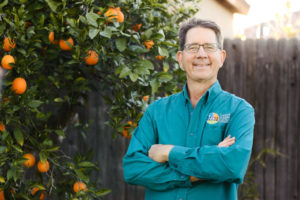
Don Titmus grew up in London and at age 16 spent 4 years being trained in horticulture through an apprenticeship and a college course. From there he continued landscaping in his hometown until he moved to Arizona in 1981, where he worked in landscaping and then starting his own business in garden maintenance. In 2003 he attended a Permaculture Design Course, which was life-changing for Don. He knew right away that this was the path he’d been waiting for, and later attended two Permaculture Teacher Trainings.


Key Topics & Entities

  • Permaculture ethics
  • Permaculture principles
  • Observation and design
  • Working with nature
  • Elements and stacking functions
  • Zones (including Zone 0 / self-care)
  • Regenerative and edible landscapes
  • Drylands permaculture
  • Rainwater harvesting
  • Perennial systems
  • Permaculture Design Course (PDC)
  • Bill Mollison
  • David Holmgren
  • Urban Farm Podcast
  • Bee Oasis (Mesa, AZ)


Key Questions Answered

What is permaculture, in simple terms?

Permaculture is the art and science of working with nature—observing natural systems and designing human habitats that align with ecological patterns rather than fighting them.

What are the core ethics of permaculture?

Care for the earth, care for people, and care for the future (often expressed as sharing surplus). These ethics guide every design decision and ensure long-term sustainability and reciprocity.

Why is observation considered the foundation of permaculture design?

Spending time observing land, climate, wildlife, and human patterns prevents costly mistakes and reveals opportunities to work with existing energy flows rather than against them.

What does it mean that “the problem is the solution”?

Challenges—such as excess heat, water runoff, or waste—often contain the seeds of their own solutions when reframed through thoughtful design.

How do elements and stacking functions create resilience?

Each element in a system (trees, chickens, compost, water systems) should serve multiple functions, increasing efficiency, reducing waste, and strengthening connections across the whole system.

What is a Permaculture Design Course (PDC), and who is it for?

A PDC is a globally recognized 72-hour introduction to permaculture principles and design, tailored to local bioregions and intended to transform how participants think about land, community, and life systems.

Why take a PDC in your own bioregion and in person?

Local courses address climate-specific realities, and in-person learning builds community, shared experience, and deeper understanding through hands-on practice.

How can permaculture principles apply beyond gardening?

Permaculture offers a framework for life—informing health, relationships, work, energy use, and even practices like yoga—by emphasizing connection, care, and intentional design.


Episode Highlights

  • Permaculture as a life framework, not just a gardening method
  • The importance of long-term observation before making land changes
  • How drought, heat, and salinity shape drylands permaculture strategies
  • Zone 0 reframed as self-care and personal sustainability
  • Stacking functions illustrated through trees, chickens, kitchens, and urban planning
  • Regenerative landscapes that produce food with minimal ongoing input
  • Information and imagination as key resources in resilient design
  • How a PDC can permanently shift worldview and decision-making
 

Editor’s Note:


*Disclosure: Some of the links in our podcast show notes and blog posts are affiliate links and if you go through them to make a purchase, we will earn a nominal commission at no cost to you. We offer links to items recommended by our podcast guests and guest writers as a service to our audience and these items are not selected because of the commission we receive from your purchases. We know the decision is yours, and whether you decide to buy something is completely up to you.

Leave a Reply

Your email address will not be published. Required fields are marked *


The reCAPTCHA verification period has expired. Please reload the page.