
987: Rules for Global Seed Saving with Bill McDorman
A chat with an expert on seeds.
In This Seed Chat:
In this Podcast: Greg Peterson and Bill McDorman explore the global rules governing seed ownership, seed saving, biodiversity, and agricultural policy. The conversation dives into international treaties, plant patenting, farmers’ rights, and the growing tension between the Global North and Global South over control of genetic resources. Bill shares firsthand experiences attending United Nations treaty negotiations and working with Indigenous seed sovereignty issues through Native Seeds/SEARCH. The episode also highlights why everyday gardeners and farmers should become “seed citizens” by saving and sharing locally adapted seeds
Editor’s Note:
Bill McDorman is a renowned seed saver, educator, and advocate for agricultural biodiversity. He co-founded the Rocky Mountain Seed Alliance and has spent decades teaching gardeners and farmers how to grow, save, and share heirloom seeds. Through workshops, speaking, and mentorship, Bill inspires communities to strengthen local food systems, preserve regional seed diversity, and protect seed sovereignty for future generations
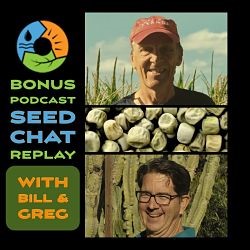
At least ten times a year we have a live Seed Saving Class with Bill McDorman, the former Executive Director of Rocky Mountain Seed Alliance, Ketchum, Idaho. He got his start in the bio-regional seed movement while in college in 1979 when he helped start Garden City Seeds. In 1984, Bill started Seeds Trust/High Altitude Gardens, a mail order seed company he ran successfully until it sold in 2013.
Come join us for the next live class, or catch up on our previous classes through our podcast episodes. Either way you will expand your seed knowledge and gain new perspectives on your food system.
Register anytime for the next event.
Register Here for the Monthly Seed Saving Class with Live Q&A
Key Topics
- Seed libraries and locally adapted seed sharing
- International Treaty on Plant Genetic Resources for Food and Agriculture (ITPGRFA)
- UPOV and global plant variety protection laws
- World Trade Organization (WTO) seed policy influence
- Farmers’ rights and seed sovereignty
- Plant patenting and intellectual property in agriculture
- Convention on Biological Diversity (CBD)
- Nagoya Protocol and access-benefit sharing
- Digital Sequence Information (DSI) and genetic ownership
- Native Seeds/SEARCH and Indigenous seed stewardship
- Organic Seed Alliance and seed policy debates
- Global North vs. Global South agricultural power dynamics
- Seed banks and the Multilateral System (MLS)
- The importance of saving open-pollinated seeds
- The future resilience of local food systems
Key Questions Answered
What is the International Treaty on Plant Genetic Resources for Food and Agriculture?
The ITPGRFA is a legally binding international treaty created to govern the conservation, sharing, and equitable use of plant genetic resources for food and agriculture. It officially entered into force in 2004 and now includes participation from more than 180 countries.
Why do global seed treaties matter to everyday gardeners and farmers?
These treaties influence who can save seeds, who profits from plant genetics, and how agricultural biodiversity is preserved. The policies affect food security, seed availability, farmer independence, and long-term resilience of local food systems.
What is UPOV and why is it controversial?
UPOV is an international agreement that grants intellectual property protections to plant breeders. Critics argue that newer versions of UPOV weaken farmers’ traditional rights to save and replant seeds while strengthening corporate control over agriculture.
How does the WTO influence seed laws around the world?
According to Bill McDorman, countries seeking participation in global trade systems often adopt UPOV-style protections as part of WTO-related trade expectations, creating pressure on smaller nations to align with industrial seed systems.
What is the Nagoya Protocol?
The Nagoya Protocol is an international agreement designed to ensure fair and equitable sharing of benefits arising from genetic resources. It attempts to address historical exploitation of Indigenous and Global South biodiversity by pharmaceutical and agricultural corporations.
What is Digital Sequence Information (DSI)?
DSI refers to genetic sequencing data derived from crops and plant varieties. A major debate centers around who owns this information and whether communities that stewarded these crops for generations should share in the economic benefits created from their genetic data.
What are farmers’ rights in global seed policy?
Farmers’ rights include the ability to save, use, exchange, and sell farm-saved seed. These rights remain one of the most contested issues in international agricultural negotiations.
Why are seed libraries important?
Seed libraries help preserve locally adapted seed varieties while strengthening regional food resilience. They also create community networks for knowledge sharing and decentralized seed stewardship.
How did Native Seeds/SEARCH navigate Indigenous seed stewardship?
Bill shares stories from his time directing Native Seeds/SEARCH, including working with Zuni and Hopi communities to renegotiate relationships around seed stewardship, naming rights, and seed distribution.
Why does Bill McDorman encourage people to attend UN treaty meetings?
He believes participation in international seed policy discussions is critical for protecting biodiversity and farmers’ rights. Attending these events allows citizens, gardeners, and small farmers to directly engage with global agricultural policy.
Episode Highlights
- Bill discovers a seed library inside a small-town New Mexico library and reflects on the importance of locally adapted seeds.
- Greg and Bill explain how seed laws emerged alongside industrial agriculture and large-scale seed commerce.
- Bill breaks down UPOV, WTO policy, and how plant patenting transformed global agriculture.
- The conversation explores how Indigenous plant genetics were historically extracted and commercialized.
- Bill recounts receiving a cease-and-desist letter regarding Zuni bean varieties while directing Native Seeds/SEARCH.
- A deep discussion unfolds around Digital Sequence Information and the ownership of plant DNA data.
- Bill explains why small farmers across Africa increasingly believe they no longer have the right to save seeds.
- The episode concludes with a call for more “seed citizens” actively saving and sharing seeds locally.
Resources
- Resource — Seed Chat Live Events — SeedChat.org
- Podcast — Urban Farm Podcast
- Organization — UPOV – International Union for the Protection of New Varieties of Plants
- Organization — World Trade Organization (WTO)
- Organization — Commission on Genetic Resources for Food and Agriculture (CGRFA)
- Treaty — International Treaty on Plant Genetic Resources for Food and Agriculture (ITPGRFA)
- Organization — Convention on Biological Diversity (CBD)
- Resource — Nagoya Protocol on Access and Benefit-sharing
- Community — Organic Seed Alliance
- Organization — Native Seeds/SEARCH
- Event — Great American Seed Up — First weekend in November in Phoenix, Arizona
*Disclosure: Some of the links in our podcast show notes and blog posts are affiliate links and if you go through them to make a purchase, we will earn a nominal commission at no cost to you. We offer links to items recommended by our podcast guests and guest writers as a service to our audience and these items are not selected because of the commission we receive from your purchases. We know the decision is yours, and whether you decide to buy something is completely up to you.