
922: Climate-Resilient Seeds for an Uncertain Future.

A chat with an expert on seeds.
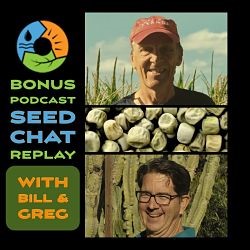
In This Seed Chat:

Greg Peterson and seed expert Bill McDorman dig into the urgent need for climate-resilient seeds as global conditions shift. They explore how traditional varieties falter under heat, drought, flooding, and unpredictable weather—and why locally adapted, open-pollinated seeds are becoming essential tools for regional food security. Bill outlines practical pathways for gardeners and growers to build resilience through diversity, landrace gardening, and modern microbiome research. Together, they offer a grounded, hopeful roadmap for anyone looking to future-proof their garden or local food system.


Key Topics

  • Climate-resilient seeds
  • Open-pollinated varieties
  • Local adaptation
  • Landrace gardening
  • Soil microbiome & mycorrhizae
  • Rizophagy (Dr. James White, Rutgers)
  • Elliot Coleman
  • John Jeavons
  • Al Gore COP30 climate update
  • Heritage grains & wheat diversity
  • Seed libraries & seed exchanges
  • National seed infrastructure concerns
  • Joseph Lofthouse & Going to Seed
  • Genetic diversity & heterosis
  • Key Questions Answered


Why do traditional seed varieties fail under climate chaos?

Because they were bred for stable, narrow climate ranges with controlled inputs—conditions that no longer exist, locally adapted seeds handle stress better and evolve alongside changing weather patterns.

How can home gardeners contribute to climate adaptation?

By introducing maximum genetic diversity into their gardens—mixing varieties, saving seeds, and participating in regional seed exchanges. This creates plant populations that actively adapt to local conditions.

What is landrace gardening, and why does it matter now?

Landrace gardening mixes wide varieties of the same crop and lets natural selection reveal the most resilient performers. It dramatically increases adaptability and requires less space and time than traditional trialing.

How do soil organisms like mycorrhizae and bacteria affect climate resilience?

They increase nutrient uptake, boost disease resistance, and help plants tolerate extreme conditions. Emerging rhizophagy research shows plants actively cultivate microbes to meet stress.

What resources should new growers explore to build resilience?

Classics like The New Organic Grower (Elliot Coleman), How to Grow More Vegetables (John Jeavons), Joseph Lofthouse’s Landrace Gardening, and foundational seed-saving guides.

Episode Highlights

  • Climate resilience requires local action, not waiting for national agricultural reform.
  • Al Gore’s COP30 update emphasizes the urgency of transitioning agriculture.
  • Soil microbiology breakthroughs (rhizophagy) are reshaping how we understand plant roots.
  • Most commercial varieties were never tested across wide climates—a huge opportunity remains.
  • Wheat alone has 400,000 documented varieties, yet only a handful dominate U.S. production.
  • Diversity—not uniformity—is the foundation of resilience.
  • Landrace gardening allows growers to trial hundreds of varieties in small spaces.
  • Seed sharing and regional networks may become essential if national systems weaken.


Editor’s Note:

Check out …


At least ten times a year we have a live Seed Saving Class with Bill McDorman, the former Executive Director of Rocky Mountain Seed Alliance, Ketchum, Idaho. He got his start in the bio-regional seed movement while in college in 1979 when he helped start Garden City Seeds. In 1984, Bill started Seeds Trust/High Altitude Gardens, a mail order seed company he ran successfully until it sold in 2013. 

Come join us for the next live class, or catch up on our previous classes through our podcast episodes.  Either way you will expand your seed knowledge and gain new perspectives on your food system.

Register anytime for the next event.
Register Here for the Monthly Seed Saving Class with Live Q&A

ZZZZZZCAPITVATEEMBEDHEREZZZZZZ


*Disclosure: Some of the links in our podcast show notes and blog posts are affiliate links and if you go through them to make a purchase, we will earn a nominal commission at no cost to you. We offer links to items recommended by our podcast guests and guest writers as a service to our audience and these items are not selected because of the commission we receive from your purchases. We know the decision is yours, and whether you decide to buy something is completely up to you.

Leave a Reply

Your email address will not be published. Required fields are marked *


The reCAPTCHA verification period has expired. Please reload the page.