

988: Growing Food with the Intention to Preserve It.
The Preserver’s Garden: Featuring Staci and Jeremy Hill of Gooseberry Bridge Farm.
In This Podcast:
Staci and Jeremy share their journey from suburban living to operating an 11-acre farm in the Ozark Mountains of Missouri. What began as a small raised-bed garden evolved into a lifestyle centered on food production, preservation, agritourism, and self-sufficiency. In this conversation, they discuss how preserving food became a cornerstone of their family’s food security strategy, why they intentionally grow crops for canning and freeze-drying, and how planning a “preserver’s garden” differs from traditional gardening. They also share lessons learned from preservation failures, the economics of home food production, and the inspiration behind their book, The Preserver’s Garden.Our Guest:
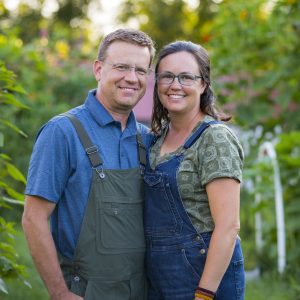 Stacy and Jeremy Hill are the owners of Gooseberry Bridge Farm, located in the Ozark Mountains of Southwest Missouri. They moved from the typical house at the end of a cul-de-sac in a subdivision to an 11-acre farm almost 10 years ago, and haven’t looked back. In addition to producing and preserving as much of their own food by canning, freezing, dehydrating, and freeze-drying their garden harvests, they also operate a you-pick flower farm with different varieties of flowers throughout the year. Their goals are to share their farm with the community and to be as self-sufficient as possible within the boundaries of what is realistic in today’s world.
Listen in….
Key Topics
- Gooseberry Bridge Farm
- Staci and Jeremy Hill
- The Preserver’s Garden
- Food preservation strategies
- Canning and water bath processing
- Freeze-drying food for long-term storage
- Growing for food security
- Building a year-round pantry
- Preserving tomatoes, peaches, beans, and zucchini
- Family involvement in food production
- Agritourism and farm experiences
- Teaching lost homesteading skills
- Foxfire books and traditional knowledge
- Reducing grocery costs through food production
Key Questions Answered
How did Staci and Jeremy transition from suburbia to farming?
They began with a small raised-bed garden after getting married and gradually expanded their food production over two decades. After moving to an 11-acre property in Missouri, they increased their gardening, added livestock, and eventually turned the farm into their primary source of income through agritourism and value-added products.
What inspired them to focus on food preservation?
As their family grew, they became interested in preserving traditional skills they could pass on to future generations. Each year they learned a new preservation method, eventually mastering canning, dehydrating, freeze-drying, and food storage.
What does a well-stocked pantry look like?
A successful pantry is built around foods a family actually enjoys eating. Rather than preserving what is easiest, they recommend preserving crops you enjoy and grow well. Their pantry includes extensive stores of tomato sauce, salsa, green beans, soups, fruits, and freeze-dried foods.
What crops provide the biggest return for food security?
Their highest-performing crops include tomatoes, bush beans, zucchini, summer squash, and okra. They emphasize growing large quantities and “outplanting failure” rather than constantly battling pests.
Why do they freeze-dry food?
Freeze-drying dramatically increases shelf life, often up to 25 years, while preserving flavor and nutrition. It also expands the range of foods they can store compared to traditional canning.
How do they handle large harvests of tomatoes?
They harvest tomatoes at the blush stage, allow them to ripen indoors, process them in batches, and often freeze excess harvests for winter canning. This approach reduces summer workload and avoids heating the kitchen during hot weather.
Why was The Preserver’s Garden written?
A publisher noticed a gap between gardening books and preservation books. The result was a book focused on planning a garden specifically for preservation goals rather than simply dealing with surplus produce after harvest.
How has preserving food impacted their household finances?
Despite having more children and growing teenagers, their grocery expenses have declined over the years while food quality has improved. Producing and preserving food has reduced their dependence on grocery stores.
What preservation failures taught them valuable lessons?
Experiments freeze-drying sweet hot sauce and banana puree resulted in spectacular messes due to sugar expansion during the freeze-drying process. These failures reinforced the importance of testing and learning through experience.
What advice do they give beginners?
Start small. Preserve one thing, grow one crop, and build confidence through small successes. Fear and misinformation often prevent people from getting started.
Episode Highlights
- Staci and Jeremy moved from a suburban cul-de-sac to an 11-acre farm in the Ozarks nearly a decade ago.
- Their farm now supports agritourism, a flower operation, livestock experiences, and food production.
- A surprise harvest of 300–400 pounds of peaches led to a week-long experiment with new preservation recipes.
- Their pantry functions as a personalized grocery store stocked with foods their family regularly eats.
- They grow approximately 100 tomato plants and harvest up to 30–40 pounds of tomatoes per day during peak season.
- Freeze-drying transformed their food preservation capacity and significantly expanded their pantry.
- Their children actively participate in gardening, food preservation, and homesteading skills.
- An Instagram post featuring their pantry went viral and helped inspire the creation of their book.
Calls to Action & Resources
Book: The Preserver’s Garden — https://thepreserversgarden.com
Farm Website: Gooseberry Bridge Farm — https://gooseberrybridge.com
Instagram: Gooseberry Bridge Farm — https://www.instagram.com/gooseberrybridgefarm
Recommended Reading: Foxfire Book Series